PROJECT 1
MAKING & UNMAKING
Important Dates & Resources
Project Brief
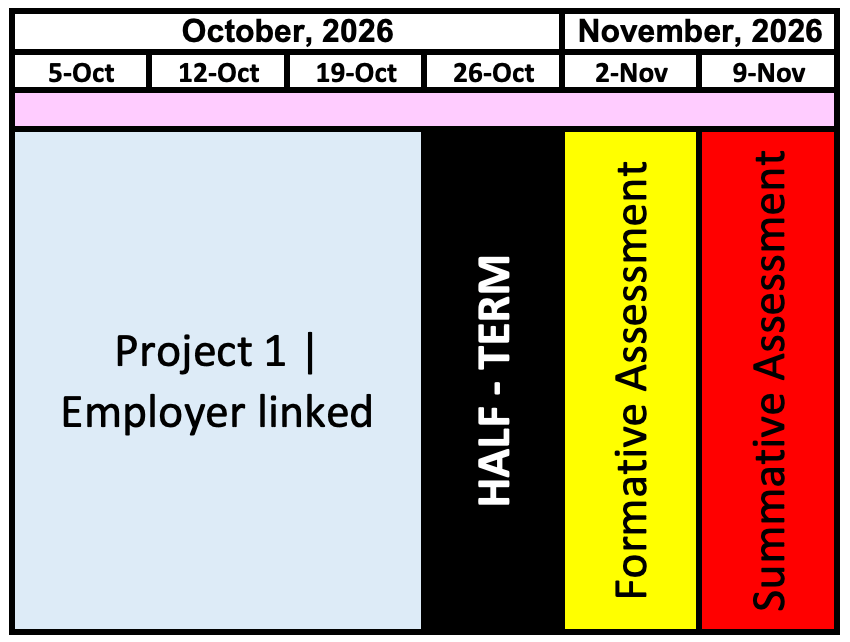
| Project Launch | w/c 5th Oct 2026 |
| Formative Feedback | w/c 2nd Nov 2026 |
| Target Completion | — |
| Summative Feedback | w/c 9th Nov 2026 |
WEEK 7 – WC/12th Oct
This week, you will research two artists who create fragmented portraits using photography. You will look closely at how they crop, repeat, resize and rearrange parts of the face, and how they use different camera angles to create unusual portraits. You will compare both artists and think about which techniques you could use later when taking your own photographs and creating your own fragmented portrait.

In Lesson Tasks
Artist Research – Fragmented Portraits
Before creating your own Fragmented Portrait, you will research two artists who break portrait photographs into sections and rebuild them in different ways:
Maurizio Galimberti
Brno Del Zou
Both artists use photography, but they arrange and combine their images differently. Look carefully at cropping, repetition, size, angles, facial features and how the photographs are put together.
The aim of this research is to help you understand their techniques before you take your own photographs.
1. Maurizio Galimberti
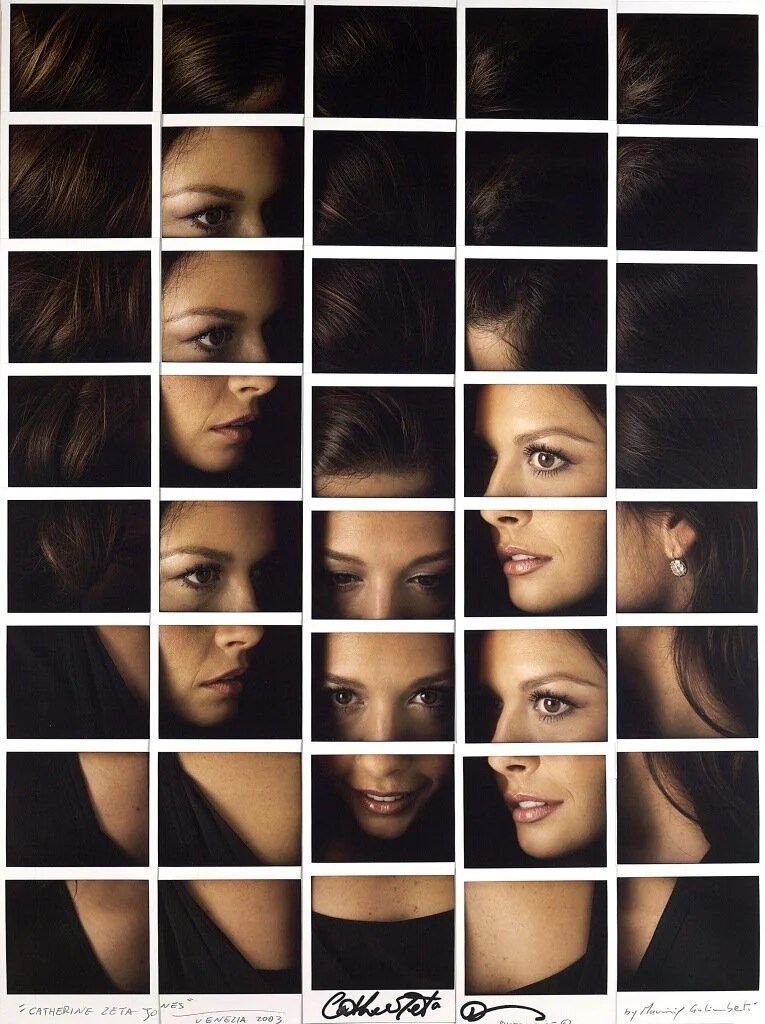
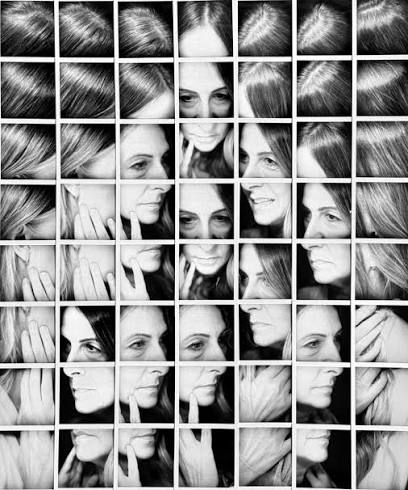
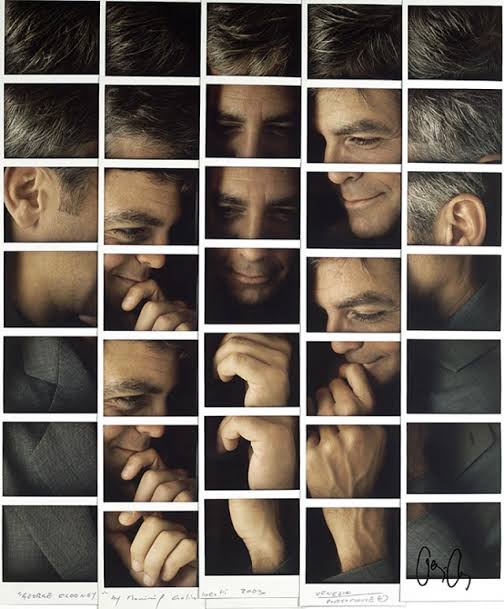
Find at least 5 examples of Maurizio Galimberti’s portrait work and upload them as a gallery.
Write a short introduction of around 50 words explaining:
- Who is Maurizio Galimberti?
- What type of photography does he create?
- How does he build his fragmented portraits?
Choose one artwork and answer the questions below.
Artwork Analysis
1. How has Galimberti broken the portrait into different sections?
Look at the number of photographs, their shapes and where they have been placed.
2. What parts of the face can you see repeated or shown more than once?
3. Does he use the same camera angle for every photograph, or does the person move and look in different directions? Give examples.
How does the artwork make you feel?
4a. What is the first part of the portrait that you notice?
4b. How does the portrait make you feel?
For example: confused, interested, uncomfortable, calm, curious, energetic, strange.
4c. What do you think makes you feel this way?
Think about the repeated eyes, different angles, movement, broken sections or unusual proportions.
Thinking about your own photography
5. If you wanted to create a portrait inspired by Galimberti, what photographs would you need to take?
Think about:
- Would you need one photograph or lots of photographs?
- Would you photograph the same person several times?
- Would the person need to move their head between photographs?
- Which angles would you need: front, side, looking up, looking down, ¾ view?
- Would you take some close-ups as well?
- Which parts of the face would you photograph more than once?
Explain your ideas in a few sentences.
2. Brno Del Zou
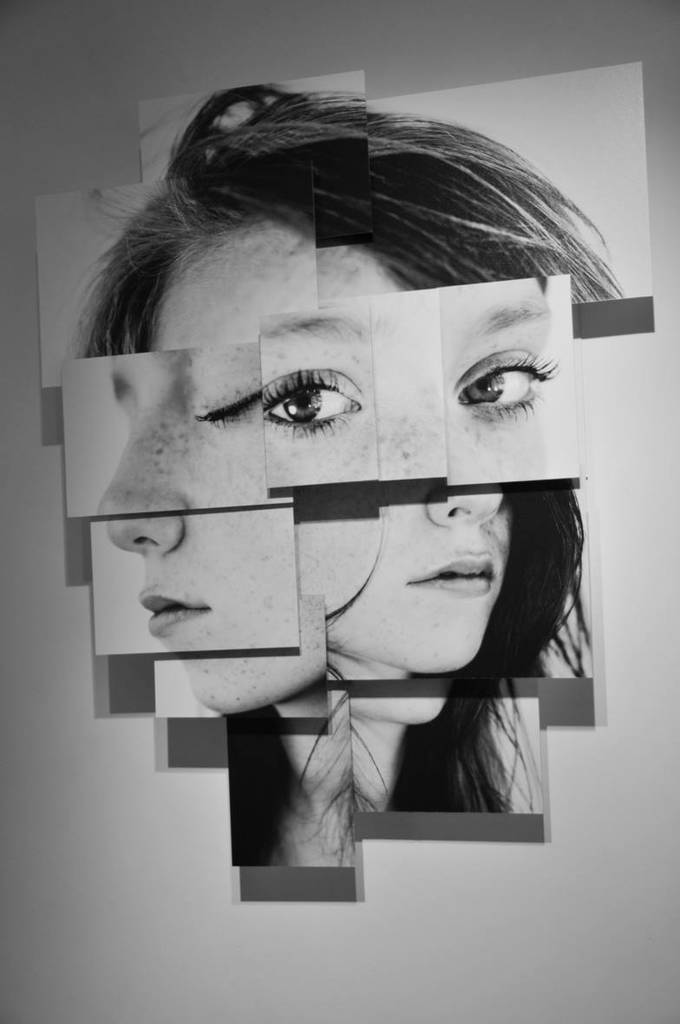
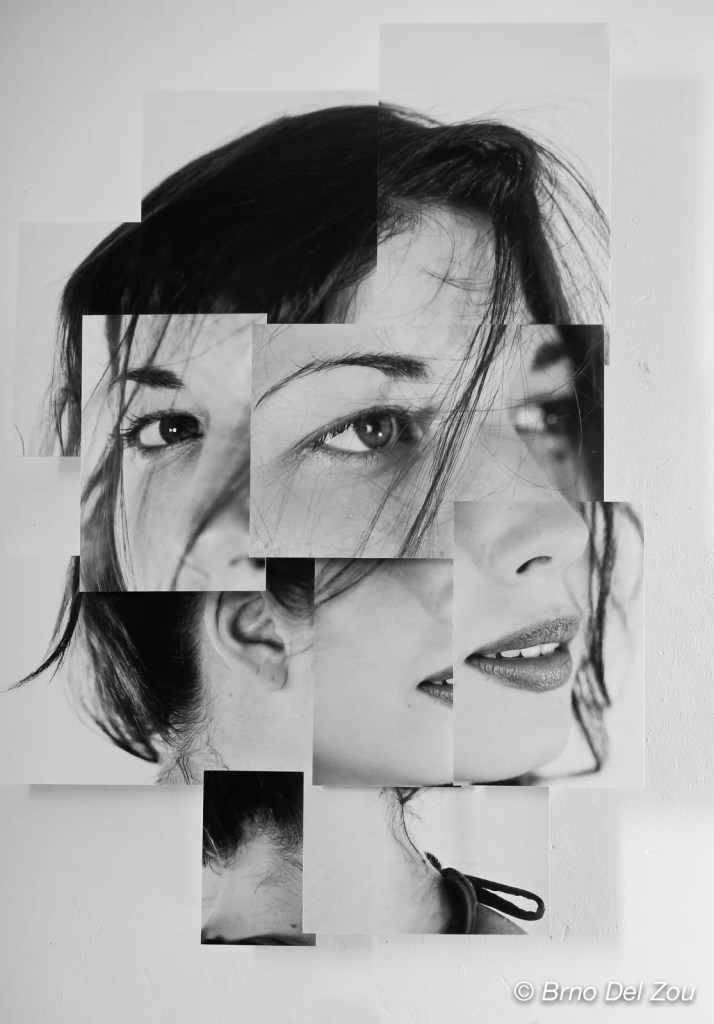
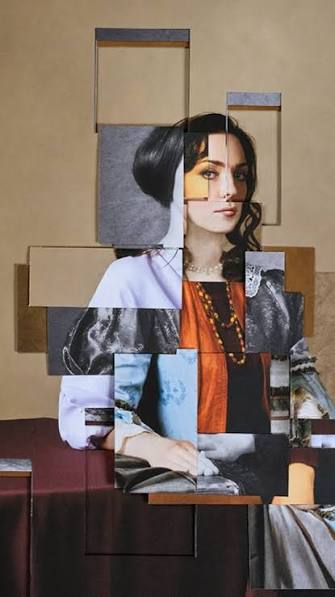
Find at least 5 examples from Brno Del Zou’s Photosculptures and upload them as a gallery.
Write a short introduction of around 50 words explaining:
- Who is Brno Del Zou?
- What are his Photosculptures?
- How does he break apart and rebuild a portrait?
Choose one artwork and answer the questions below.
Artwork Analysis
1. Which parts of the face have been made bigger, smaller, moved or repeated?
2. How are the different photographs layered or placed on top of each other?
3. Can you see the person from different angles in the same artwork? Give examples.
How does the artwork make you feel?
4a. Which part of the artwork do you look at first?
4b. How does the portrait make you feel?
For example: curious, uncomfortable, surprised, confused, calm, interested or strange.
4c. What part of the artwork creates that feeling?
Think about the different sizes, overlapping photographs, repeated features and different viewpoints.
Thinking about your own photography
5. If you wanted to create a portrait inspired by Del Zou, what photographs would you need to take?
Think about:
- How many different photographs might you need?
- Would you photograph the same person from several angles?
- Which facial features would need close-up photographs?
- Would some photographs need to be taken from very close and others from further away?
- Would the person need to turn their head or change expression?
- Which photographs could later be made larger or smaller?
Explain how you think you could use photography to create something inspired by his work.
3. Compare the Artists
Place one artwork by Galimberti and one artwork by Del Zou side by side.
Answer:
What are 3 things that are similar about their work?
What are 2 things that are different?
Which artist’s work do you prefer? Why?
Which artist do you think would be easier to use as inspiration for your own photographs? Why?
What photographs would you need to take differently depending on which artist you chose?
Blog heading
Artist Research – Fragmented Portraits
Your page should contain:
Maurizio Galimberti – 5 images + introduction + artwork analysis
Brno Del Zou – 5 images + introduction + artwork analysis
Comparing the Artists – 2 images + comparison
WEEK 6 – WC/5th Oct
This week, you will explore the theme Making & Unmaking by creating a visual mind map on Milanote. You will use images, keywords, artists, materials, techniques and connections to investigate different meanings of the theme and begin identifying ideas that could inspire your own artwork.
In Lesson Tasks
Task 1: Create a Visual Mind Map on Milanote – Exploring ‘Making & Unmaking’
Objective
Create a visual mind map on Milanote to explore the Project 1 theme Making & Unmaking.
Your board should combine keywords, short explanations, images, artists, materials, techniques and connections between ideas. The aim is to help you discover different directions you could explore later in the project.
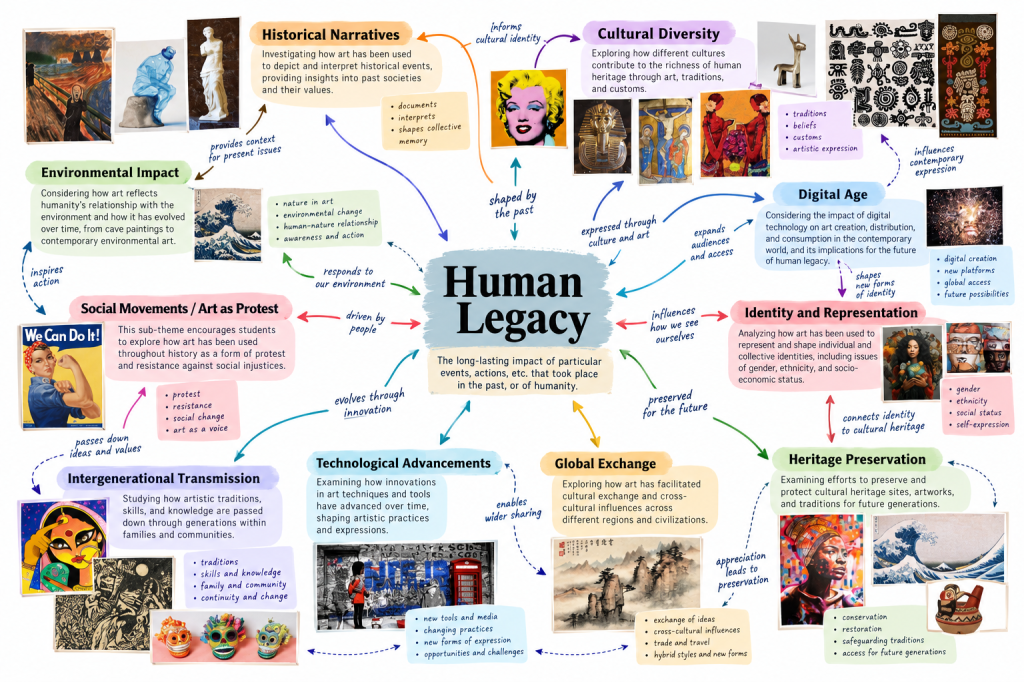
Instructions
- Open Milanote
- Go to Milanote.com and log in or create a free account.
- Create a new blank board.
- Title your board: Making & Unmaking – Visual Mind Map.
- Double click on that board to open it.
- Start with the main theme
- Place MAKING & UNMAKING note in the centre of your board.
- Underneath, add a simple explanation in your own words of what you think the theme could mean.
- Create different branches
Add different ideas around the main theme. You could explore:
Making / Creating – building, constructing, assembling, producing
Unmaking / Destruction – breaking, cutting, tearing, dismantling, removing
Transformation – changing something into something new
Repair and Restoration – fixing, rebuilding, mending
Materials – paper, fabric, clay, wood, plastic, digital materials
Growth and Decay – nature, ageing, erosion, decomposition
Memory and Traces – marks, remains, fragments, things left behind
Recycling and Reuse – turning old materials into something new
Process – how an artwork changes while it is being made
Technology and Digital Unmaking – glitch, distortion, deleting, editing and manipulating images
You do not need to use every suggestion. Add your own ideas too. - Develop each branch
Do not just write one word. Add smaller ideas around each section.Think about questions such as:
- What could be made?
- How could something be unmade?
- Can destroying something actually create something new?
- What happens when something is cut, broken, erased or changed?
- Can something damaged be repaired?
- What materials could you experiment with?
- What techniques could communicate this idea?
- What artists or designers could relate to it?
- Add techniques and experiments
Include practical ideas you could potentially try, such as:
Collage – tearing – cutting – layering – stitching – weaving – painting over– erasing – sanding – breaking – rebuilding –photography – digital distortion – glitch – repetition – scanning – manipulating images - Use lots of visuals
This should be a visual research board, not a page of writing. Add:
Artwork – Photography – Textures – Objects – Materials – Colours – Artist references
Interesting examples of making, breaking, repairing or transforming
Try to have an image beside most of your main ideas. - Show the connections
This is important. Use arrows and lines to connect ideas that relate to each other.
For example:
Destruction → Transformation
Damage → Repair → Making
Nature → Decay → Unmaking
Old materials → Recycling → New artwork
Technology → Glitch → Distortion
Some ideas should connect to more than one section. Your board should look like a network of ideas rather than separate boxes. - Final check
Before submitting, make sure your board has:- Making & Unmaking clearly in the centre
- At least 8 main branches
- Short explanations and keywords
- Plenty of images
- Materials and techniques you could experiment with
- Artist/artwork ideas to investigate
- Arrows connecting related ideas
- At least 3 connections between different branches
- Your own ideas, not only the examples given above
The finished board should help you answer the question: “What could Making & Unmaking mean for my own artwork?”

